
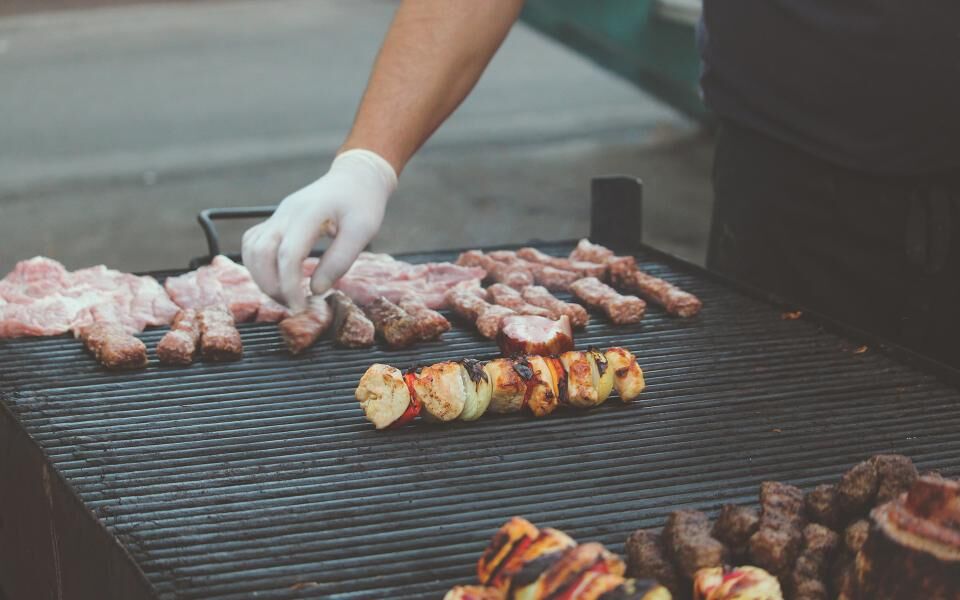
An outdoor kitchen can be the best room in the house through the warmer months. A built in barbecue, a stone bench and somewhere to sit make a deck or patio feel like an extension of the home. Most of these kitchens run on gas. That means the design has to work for safety as well as for looks.
Gas is safe when it is installed and used correctly. Problems tend to come from poor airflow, worn fittings or a barbecue placed too close to the house. This guide covers where to put the kitchen, how to choose a gas supply and how to check for leaks. Rules differ between states, so confirm the details with your local regulator.
Choosing the right spot
The best outdoor kitchens sit close enough to the house for easy serving but far enough away to stay safe. Think about how people move between the kitchen, the dining table and any pool. If you are planning the pool and garden together, mark out the cooking zone at the same time. That way the barbecue does not end up beside a busy walkway.
Fire services quoted by Energy Safe Victoria advise using a barbecue in a clear space, never indoors or in a confined area. It also says to keep it clear of walls, fences and other property. Leave room behind and above the grill for heat to escape. Avoid placing it under low eaves or close to timber screens.
Ground cover matters as well. A paved or stone base suits the cooking zone better than grass, which wears quickly under foot traffic and spills. You can still soften the space with lawn types that suit landscape design further out from the kitchen. Keep the turf for lounging and play, and use hard surfaces where the cooking happens.
Roof, walls and airflow
Many people want a roof over the outdoor kitchen so they can cook in any weather. That is fine, but enclosing the space too much creates a risk. Energy Safe Victoria warns that outdoor gas appliances can cause carbon monoxide poisoning where ventilation is poor. Carbon monoxide has no smell or colour and can be fatal.
Western Australia’s Building and Energy division gives clear guidance on what counts as enough natural airflow. Its guide to safe locations for gas barbecues and patio heaters lists several layouts that work. These include four open sides with a roof, or two walls with a roof. A space with three walls and a roof needs at least a quarter of its perimeter open, with 30 per cent or more of the other walls left unrestricted.
The same guide sets a minimum gap of 1,200 millimetres between the cooking surface of a domestic barbecue and any ceiling or roof above. On a balcony or verandah, at least 20 per cent of the wall area should stay permanently open. Doors and windows leading inside should be closed while the barbecue is running. Local building laws may also apply, so check with your council before you build.
Indoor and outdoor barbecues are not the same
Outdoor barbecues are built for open air. The WA guide notes they are not tested for emissions to the same standard as indoor appliances. Building and Energy does not recommend modifying an outdoor barbecue for indoor use. If you want to cook inside an enclosed alfresco room, look at appliances made for that purpose with proper mechanical ventilation.
Natural gas or LPG
An outdoor kitchen can run on mains natural gas or on LPG cylinders. The WA guide explains that outdoor barbecues may connect by flexible hose to a natural gas bayonet point, through fixed gas piping or to an LPG cylinder. A fixed connection suits a permanent kitchen with a built in grill. Any new pipework or bayonet point should be installed by a licensed gas fitter.
Never mix the two fuels. Energy Safe Victoria says not to connect LPG cylinders to appliances designed for natural gas. Check the appliance label before buying, and ask the supplier if the barbecue can be converted. Conversions should only be done by a qualified person.
If you use LPG, plan where the cylinder will live inside the cabinetry. Energy Safe Victoria says cylinders should stand upright on a firm, level base that will not burn. The relief valve should face away from anything that could catch fire. Cylinders should only be used in well ventilated outdoor areas.
Looking after cylinders and connections
Energy Safe Victoria advises using only cylinders tested within the last 10 years and checking that the test date is marked. Leaking, damaged or corroded cylinders should not be used. Close the valve when the barbecue is off, and replace the dust cap when the cylinder is not connected. Fill cylinders only at authorised filling stations.
Newer cylinders and barbecues use an updated connection. Energy Safe Victoria explains that the LCC27 connection will not leak gas when imperfectly connected. It also has a thermal cut off that stops gas flowing if there is a fire at the connection. These connections only work with the matching new cylinder, though older Type 21 barbecues work with both.
Hand tighten the fitting rather than using a wrench. Energy Safe Victoria warns that multigrips or wrenches can permanently damage the valve and connection. A firm hand turn is enough for a good seal. If gas will not flow, check that the connection is screwed in fully.
Checking for leaks
A soapy water test takes a minute and is worth doing every time you connect a cylinder. Energy Safe Victoria explains the steps in its advice on safer barbecue gas connections. It suggests testing the cylinder connection each time you hook it up.
- Connect the cylinder to the barbecue and turn on the gas.
- Spray the connections with soapy water.
- If no bubbles appear, it is safe to cook.
- If bubbles appear, turn off the gas and check the hose and fittings are tight.
- If bubbles keep forming, turn off the gas and have the connection replaced.
Never use a flame to look for a leak. Energy Safe Victoria also notes that LPG is heavier than air and can pool in low places. Keep the cylinder cabinet open at the base or well vented. If you smell gas, turn it off at the cylinder.
Everyday care and finishing touches
Clean off excess fat after each use. Energy Safe Victoria says this lowers the fire risk the next time you cook. Check the condition of hoses and connections before you turn on the gas. Have the barbecue serviced by a qualified gas fitter in line with the manufacturer’s instructions.
Simple checks like these are part of good preventative maintenance for your home. They stop small faults becoming costly repairs. If the barbecue catches fire, call emergency services and turn off the gas at the cylinder or meter if it is safe.
Once the safety side is sorted, the fun part starts. Herbs grown beside the bench are handy for cooking and soften hard stone and steel. Choosing the right size pot for each plant keeps them healthy through the hot months. Place pots and planters well away from the grill and the cylinder cabinet.
Frequently asked questions
Can I put a gas barbecue under a pergola or patio roof?
Often yes, as long as the area has enough natural airflow. WA guidance lists layouts that work, such as four open sides with a roof. Keep at least 1,200 millimetres between the cooking surface and the roof above.
Do I need a gas fitter for an outdoor kitchen?
Any new fixed gas piping or bayonet point should be installed by a licensed gas fitter. For a portable barbecue on an LPG cylinder, follow the manufacturer’s instructions and test the connection each time. Regular servicing by a qualified gas fitter is still a good idea.
How do I know if an LPG cylinder is still safe?
Look for the test date stamped on the cylinder. Energy Safe Victoria says to use only cylinders tested within the last 10 years. Do not use any cylinder that is leaking, damaged or corroded.
Gas safety rules are set by each state and territory and can change. Check the current requirements with your local gas regulator or council before you build.